Why High Interest Rates Make Home Staging More Important
Sep 03, 2026
When interest rates rise, buyers don’t simply become more cautious—they become more focused on value.
A higher mortgage rate means the cost of borrowing increases. For buyers, that can translate into higher monthly payments and less flexibility in their overall budget. As a result, buyers may take a harder look at every property they consider and ask an important question:
“Is this home worth what I’m being asked to pay?”
That question makes presentation more important than ever.
Home staging isn’t simply about making a property look beautiful. In a market where buyers are carefully evaluating their financial decisions, strategic staging can help eliminate distractions, address visual objections, and make the value of a property easier to understand.
It doesn’t guarantee a faster sale or a higher offer. But when buyers are scrutinizing every dollar, presenting a home strategically can be an important part of the selling strategy.
Higher Interest Rates Change the Buying Decision
Interest rates directly affect the cost of financing a home.
When borrowing becomes more expensive, buyers may become more selective about which properties they are willing to consider. They may compare homes more carefully, negotiate more aggressively, and pay closer attention to condition and perceived value.
For sellers, this creates a challenge.
Your home isn’t being evaluated in isolation. Buyers are comparing it against other properties while considering the total financial commitment involved.
A property that looks neglected, cluttered, poorly maintained, or difficult to visualize may give buyers another reason to question its value.
And every additional question can create another opportunity for negotiation.
When Buyers Scrutinize Value, Presentation Matters
Imagine two homes with similar locations, square footage, and asking prices.
One is clean, well-organized, professionally presented, and photographed beautifully.
The other has crowded rooms, dated-looking furniture, poor lighting, and spaces that are difficult to understand.
Even if the underlying properties are comparable, the buyer’s perception of value may be very different.
That’s where professional home staging becomes a financial consideration rather than simply a decorative one.
Staging helps communicate the property’s potential.
It shows buyers:
- How rooms can function
- How furniture fits within the space
- Which features deserve attention
- How the floor plan flows
- How the home could feel when properly furnished
The goal is to reduce uncertainty.
Every Unresolved Objection Can Weaken an Offer
This is especially important when buyers are already concerned about affordability.
Consider what happens during a showing.
A buyer walks into a small-looking living room.
They think:
“Is my furniture going to fit?”
They enter an empty dining room.
“What would I even do with this space?”
They see a dark bedroom.
“Why does this room feel so small?”
They notice outdated décor.
“How much will it cost to update this?”
None of these questions necessarily mean the home has a serious problem.
But they introduce perceived objections.
And when buyers are already carefully evaluating their financial commitment, additional uncertainty can make them less confident about making a strong offer.
Professional staging helps answer some of these questions visually before they become objections.
Staging Helps Buyers See the Value of the Space
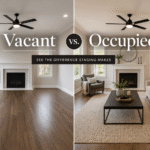
A vacant room tells buyers what a room is.
A strategically staged room can show buyers what that room could be.
Furniture establishes scale. Accessories create context. Placement demonstrates functionality.
For example, an awkward corner may become an obvious home office once it’s properly staged.
A large open room may become more understandable when divided into a living and dining area.
A small bedroom may feel more functional when furnished with appropriately sized pieces.
The objective isn’t to hide the property’s limitations.
It’s to make sure buyers can accurately understand the space and appreciate its possibilities.
Strong Presentation Can Support Your Pricing Strategy
Price is always one of the biggest factors in a real estate transaction.
However, buyers don’t evaluate price separately from presentation.
They evaluate whether the price makes sense for what they’re seeing.
If a home is presented poorly, buyers may perceive that they are being asked to pay for potential they cannot see.
That can lead to questions such as:
“Why is this home priced this high?”
On the other hand, a thoughtfully staged property can make the home’s features easier to recognize.
This doesn’t mean staging allows a seller to overprice a home.
Pricing still needs to reflect the market, location, condition, and comparable properties.
Instead, staging helps ensure that the property is presented in a way that supports the value being communicated.
Why Listing Photos Matter Even More in a High-Rate Market
The financial evaluation often begins before a buyer ever schedules a showing.
Buyers scroll through listing after listing, comparing properties from their phones and computers.
If your listing photos don’t immediately communicate value, buyers may never make it to the showing.
Professional home staging can improve the visual presentation of those photos by creating:
Better Room Composition
Furniture can be positioned to create balanced, visually appealing spaces.
Clearer Functionality
Buyers can immediately understand what each room is designed for.
Stronger First Impressions
Clean, bright, thoughtfully staged rooms can make a listing more compelling.
Consistent Presentation
A cohesive look throughout the home helps the property feel intentional and well cared for.
When buyers are comparing several properties at similar price points, strong presentation can help your listing earn a closer look.
Staging Is Not About Hiding Problems
Professional staging should never be used to disguise legitimate property issues.
If the roof needs repair, the plumbing needs attention, or there are significant maintenance concerns, those issues should be addressed appropriately.
Instead, staging focuses on the things buyers experience visually:
- Clutter
- Poor furniture placement
- Lack of functionality
- Excessive personalization
- Weak focal points
- Dark or uninviting spaces
- Underused rooms
The goal is to remove unnecessary objections, not conceal genuine ones.
The Financial Case for Investing in Presentation
Sellers naturally ask:
“Why should I spend money staging a home I’m trying to sell?”
It’s a fair question.
The answer is that selling a property is itself a marketing process.
Just as businesses invest in photography, advertising, branding, and presentation to attract customers, sellers invest in preparing their property to attract buyers.
Home staging is one component of that strategy.
The potential value comes from helping the property:
- Stand out among competing listings
- Attract buyer attention
- Communicate functionality
- Create a stronger first impression
- Reduce unnecessary visual objections
- Support the property’s perceived value
There are no guarantees in real estate. Market conditions, pricing, location, inventory, and buyer demand all affect the final outcome.
But sellers can control how their property is presented.
What Sellers Should Focus On When Interest Rates Are High
When buyers are more financially cautious, sellers should think beyond:
“Does my house look nice?”
Instead, ask:
“Does my home clearly communicate its value?”
Walk through each room from the perspective of someone seeing it for the first time.
Can they understand the room’s purpose?
Can they move through it easily?
Can they see the property’s best features?
Does anything make the home feel smaller, darker, or less maintained than it really is?
Does the presentation create additional questions about the property’s value?
These are the questions professional staging can help address.
A Simple Pre-Listing Presentation Checklist
Before putting your home on the market, consider:
- Declutter.
Remove unnecessary furniture and belongings that make rooms feel crowded. - Depersonalize.
Reduce highly personal décor so buyers have more room to imagine themselves in the property. - Improve lighting.
Open blinds, clean windows, and replace burned-out bulbs. - Define every room.
Make sure buyers can immediately understand how each space can be used. - Improve furniture placement.
Create comfortable pathways and make rooms feel functional. - Address visible maintenance issues.
Small problems can become unnecessary distractions during showings. - Prioritize photography.
Your staged home should be professionally photographed so its presentation translates online. - Get a professional perspective.
A staging consultation can identify issues sellers may not notice because they are accustomed to their home.
The Bottom Line: When Money Matters, Value Has to Be Visible
Higher interest rates can make buyers more careful about where they put their money.
That means sellers can’t control the mortgage market—but they can control how their property is presented.
When buyers scrutinize value, every unanswered question matters.
Every cluttered room.
Every awkward layout.
Every poorly presented space.
Every feature that isn’t being properly showcased.
These details may create uncertainty that can affect how a buyer evaluates the property.
Professional home staging helps turn presentation into a strategic selling tool. By making the home’s functionality, strengths, and potential easier to understand, staging can help buyers focus on the value rather than the distractions.
The goal isn’t to make a home look expensive.
The goal is to make its value easier to see.
Key Takeaways
When interest rates are high:
- Buyers may scrutinize their purchasing decisions more carefully.
- Perceived value becomes increasingly important.
- Poor presentation can create unnecessary objections.
- Staging can help buyers understand a property’s functionality and potential.
- Strong listing photos can help a property stand out online.
- Professional staging can support the overall marketing and selling strategy.
- Staging cannot guarantee a specific price or selling timeline.
Ultimately, presentation is part of the value conversation.
When buyers are asking whether a home is worth the investment, sellers want the answer to be as clear as possible.
Frequently Asked Questions
Does home staging become more important when interest rates are high?
It can be particularly valuable because buyers may pay closer attention to perceived value and potential expenses. Staging helps present the property clearly and reduce unnecessary visual objections.
Can staging help me get a higher offer?
Staging cannot guarantee a higher offer. However, stronger presentation can improve buyer perception and interest, which may contribute to a more competitive selling environment depending on the property and market.
Should I stage my home if I already have a good price?
Yes. Price and presentation work together. Even a competitively priced home needs to communicate its value effectively to buyers.
Is home staging only about making a house look beautiful?
No. Professional staging is also about functionality, space planning, buyer psychology, and marketing. The goal is to help buyers understand and appreciate the property’s potential.
Should I stage before taking listing photos?
Yes. Ideally, staging and preparation should be completed before professional real estate photography so the online listing reflects the property’s strongest presentation.
Ready to Make Your Home’s Value Stand Out?
When buyers are carefully evaluating every dollar, your home’s presentation matters.
Don’t let avoidable distractions become reasons for buyers to question your property’s value.
A professional staging consultation can help identify opportunities to improve your home’s presentation, highlight its strongest features, and create a more compelling experience for potential buyers.
Contact us today to schedule a personalized home staging consultation and discover how strategic staging can help your property stand out in today’s market.
Latest Posts
- How Realtors Can Win More Listings with Professional Home Staging
- Essential Home Staging Tips Before Your Listing Photos Are Taken
- Why High Interest Rates Make Home Staging More Important
- How Professional Home Staging Helps Homes Sell Faster
- 10 Home Staging Mistakes That Could Cost You Buyers
- Vacant vs. Occupied Home Staging: Which Is Right for You?
- Why Home Staging Is Worth the Investment When Selling Your Home
- Why Staging Matters, Even in a Seller’s Market
- Top 10 Tips for Staging a Home for Photos
- Luxe Minimalist Staging: Less Meets Wow
- House Staging Services: Transforming Homes to Attract More Buyers
- Is Professional Home Staging Worth the Cost?
- Eco-Staging on a Budget That Actually Works
- How to Style Your Bookshelf: Styling Tips Like a Design Pro
- Home Staging 101: What is Staging and Is it Necessary for Selling Your Home?
- Multipurpose Staging Rooms That Show Flexibility
- Virtual Staging That Sells: How to Wow Buyers Without Lifting a Couch
- How Staging a House Transforms Its Value
- Rental Property Makeovers That Actually Pay Off
- Low Budget Home Staging That Still Looks High-End