What to Expect During a Professional Home Staging Consultation
Oct 07, 2026
What to Expect During a Professional Home Staging Consultation
Preparing a home for sale can feel overwhelming. There are repairs to consider, rooms to organize, photos to schedule, and countless decisions about what buyers may notice first.
One of the easiest ways to bring structure to the process is to start with a professional home staging consultation.
A staging consultation gives you an opportunity to have an experienced professional look at your property from a buyer’s perspective. Instead of guessing what needs to change, you can receive recommendations based on the home’s layout, condition, presentation, and selling goals.
A consultation doesn’t necessarily mean completely furnishing or redesigning your home. Depending on the property, you may only need a few strategic adjustments. Other homes may benefit from more comprehensive vacant or occupied staging.
Understanding what happens during a consultation can make the process feel much more straightforward.
What Is a Home Staging Consultation?
A home staging consultation is an evaluation of your property focused specifically on preparing it for the real estate market.
During the consultation, a professional stager assesses the home and identifies opportunities to improve its presentation. This can include everything from furniture placement and decluttering to lighting, room function, curb appeal, and overall buyer appeal.
The recommendations are based on the property itself rather than a one-size-fits-all checklist.
For example, one home may need furniture removed to create better flow, while another may need additional furniture to help buyers understand an empty room.
The goal is to determine what will make the most sense for your property.
Why Schedule a Consultation Before Listing?
Many homeowners wait until their property is already on the market before thinking about staging.
By then, listing photos may already have been taken, marketing materials may already be published, and potential buyers may already be seeing the property.
Starting with a consultation gives you an opportunity to prepare before those important marketing steps.
A professional consultation can help you:
- Identify areas that need attention
- Prioritize preparation tasks
- Improve room functionality
- Reduce visual distractions
- Highlight desirable features
- Prepare for professional photography
- Create a more cohesive presentation
- Determine whether occupied or vacant staging is appropriate
The purpose isn’t to make unnecessary changes. It’s to make strategic changes that support the way the property will be marketed.
Step 1: The Initial Walkthrough
The consultation typically begins with a walkthrough of the property.
The stager will look at the home as a potential buyer might experience it—from the entrance through the main living areas and into individual rooms.
This is different from simply looking around and deciding what looks attractive.
The stager is evaluating questions such as:
- What catches your attention when you enter?
- Does the furniture allow easy movement?
- Are rooms clearly defined?
- Are there areas that feel crowded?
- Are there spaces that feel empty or unfinished?
- Which features should receive more attention?
- Are there visual distractions?
- Does the home photograph well?
This walkthrough creates the foundation for the rest of the consultation.
Step 2: Evaluating Each Room
After the initial walkthrough, the stager will look more closely at individual spaces.
Living Areas
Living rooms are often an important part of the buyer experience.
A stager may evaluate furniture size, placement, conversation areas, traffic flow, lighting, and focal points.
Sometimes the best recommendation is simply removing a piece of furniture. Other times, rearranging existing pieces can create a completely different feeling.
Kitchen
The kitchen should feel clean, functional, and spacious.
Recommendations may include reducing countertop items, organizing visible storage, removing unnecessary appliances, or adding simple accessories that create warmth.
The goal is to make the kitchen’s features easier to notice rather than covering them with décor.
Bedrooms
Bedrooms should communicate comfort and functionality.
A stager may evaluate whether the furniture is appropriately scaled for the room and whether the layout allows enough space to move comfortably.
For a primary bedroom, simple bedding, balanced furniture placement, and minimal accessories can help create a polished presentation.
Bathrooms
Bathrooms receive close attention because cleanliness and maintenance can strongly influence buyer perception.
A consultation may include recommendations to remove personal products, organize countertops, improve lighting, replace worn accessories, or address visible maintenance issues.
Entryway and Exterior
The consultation doesn’t stop at the interior.
The front entrance is part of the property’s first impression. A stager may recommend cleaning the entry, removing unnecessary items, refreshing landscaping, or making small improvements to the front door area.
Step 3: Identifying Your Home’s Strongest Features
A good staging strategy isn’t only about fixing problems.
It’s also about identifying what makes your property worth noticing.
Perhaps your home has:
- An open floor plan
- Large windows
- A beautiful fireplace
- A spacious kitchen
- High ceilings
- A large primary suite
- A desirable outdoor area
- Unique architectural details
The stager considers how furniture, lighting, and accessories can direct attention toward these features.
For example, an oversized sofa may block a beautiful fireplace. Simply changing the furniture arrangement could make that feature a much stronger focal point.
Step 4: Discussing Your Selling Goals
Every property and seller has different circumstances.
You may be preparing to sell immediately, getting ready for an upcoming listing, or working with a real estate agent to establish a marketing timeline.
During the consultation, it’s helpful to discuss your goals and expectations.
Your staging professional may want to understand:
- When you plan to list
- Whether the home is occupied or vacant
- Whether furniture is currently in the property
- Your preparation timeline
- Any areas you’re particularly concerned about
- The type of property you’re selling
This information helps shape recommendations around your situation.
Step 5: Determining the Right Type of Staging
Not every home needs the same staging approach.
Occupied Home Staging
If you’re still living in the property, an occupied staging plan may focus on working with your existing furniture and belongings.
Recommendations might include:
- Removing excess furniture
- Rearranging pieces
- Decluttering
- Depersonalizing certain areas
- Simplifying décor
- Improving lighting
- Reorganizing rooms
The objective is to improve the property’s presentation while keeping it functional for everyday living.
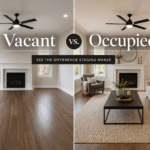
Vacant Home Staging
If the property is empty, vacant home staging can help give rooms scale and purpose.
Furniture allows buyers to better understand how a space can function and how much room is available.
Vacant staging can be especially useful for newly built homes, investment properties, and homes where the seller has already moved.
Step 6: Receiving Personalized Recommendations
One of the biggest benefits of a professional consultation is that you don’t have to guess what to prioritize.
Instead of receiving generic advice like “make the home look nicer,” you can receive specific recommendations for your property.
For example:
Instead of:
“Update the living room.”
You may hear:
“Remove the oversized chair, reposition the sofa toward the fireplace, and simplify the accessories on the coffee table.”
Specific recommendations make preparation much easier to act on.
Step 7: Prioritizing What Matters Most
You don’t necessarily need to address every possible imperfection in your home.
A consultation can help distinguish between:
Must-Do Improvements
Items that may noticeably affect the property’s presentation, such as excessive clutter, blocked walkways, or distracting furniture.
Nice-to-Have Improvements
Updates that could enhance the appearance but may not be essential.
Seller Decisions
Changes that depend on your timeline, budget, and overall selling strategy.
This prioritization helps prevent sellers from spending money unnecessarily.
What a Home Staging Consultation Does Not Mean
A consultation does not automatically mean that you need to:
- Replace all your furniture
- Renovate your entire kitchen
- Repaint every room
- Buy expensive décor
- Move out of your home
- Completely redesign the property
Every property is different.
Sometimes a home needs a full staging installation. Sometimes it needs a few hours of strategic adjustments.
The purpose of a consultation is to determine what makes sense based on the property’s current condition and selling goals.
How to Prepare for Your Consultation
You don’t need to have everything perfect before the stager arrives.
However, a few simple steps can make the consultation more productive.
Be Open to an Outside Perspective
You may have lived in your home for years, which means you naturally see it differently than a buyer would.
Try to approach the consultation with an open mind.
Recommendations aren’t personal criticisms. They’re intended to help present the property from a buyer’s perspective.
Know Your Timeline
If you already have a target listing date, share it with your staging professional.
Knowing your timeline can help determine which recommendations should be addressed first.
Share Your Concerns
If there’s a particular room you’re unsure about, mention it.
Maybe the living room feels too small, the guest bedroom doesn’t have a clear purpose, or you’re unsure whether your current furniture works for the property.
These details can help guide the consultation.
Common Mistakes to Avoid Before a Staging Consultation
Don’t Buy New Furniture Immediately
Wait until you’ve received professional recommendations. You may discover that rearranging or removing existing pieces is enough.
Don’t Start Major Renovations Without a Plan
Not every renovation will make sense before selling. Consider the property’s market position and get professional guidance before making major investments.
Don’t Hide Everything in the Garage
Moving clutter from the living room to another visible area doesn’t solve the problem.
Storage areas, garages, and closets can also be evaluated by buyers.
Don’t Wait Until After Photography
Ideally, staging decisions should be made before professional listing photos are taken.
Your online presentation is an important part of attracting buyer attention.
How Staging Can Support Your Home’s Marketing
A staging consultation is ultimately about more than appearance.
It is part of the property’s marketing strategy.
A thoughtfully prepared home can help buyers:
- Understand the layout
- Visualize how rooms can be used
- Notice important features
- Feel more comfortable during showings
- Develop a stronger connection with the property
Professional staging cannot guarantee a specific sale price, selling timeline, or offer.
However, improving the property’s presentation can strengthen buyer perception and potentially increase interest or contribute to a more competitive selling environment.
Home Staging Consultation Checklist
Before your appointment, keep this simple checklist in mind:
- Know your target listing timeline.
- Identify rooms you’re concerned about.
- Be prepared to discuss your selling goals.
- Don’t purchase new furniture before receiving recommendations.
- Make a note of any visible repairs or maintenance issues.
- Be open to rearranging or removing existing furniture.
- Ask questions about occupied vs. vacant staging.
- Discuss what should be completed before photography.
- Ask about the recommended next steps.
Key Takeaways
A professional home staging consultation is designed to make preparing your property for sale more strategic and less overwhelming.
During the process, a staging professional evaluates your home’s layout, furniture, lighting, décor, functionality, and overall presentation. They then provide recommendations based on what will help showcase the property most effectively.
The most important thing to remember is that there is no single staging formula for every home.
Your property may need a full staging installation, occupied staging, vacant staging, or simply a series of targeted improvements.
The consultation helps determine which approach makes the most sense.
Frequently Asked Questions
How long does a home staging consultation take?
The length can vary depending on the size of the property and the scope of the evaluation. Larger homes or properties requiring more detailed recommendations may take longer.
Do I need to clean before a staging consultation?
The home doesn’t need to be perfect. However, having the property reasonably accessible allows the stager to evaluate furniture, rooms, storage areas, and overall flow more effectively.
Does a consultation mean I have to hire the staging company?
Not necessarily. A consultation is an opportunity to evaluate the property and understand what staging approach may be appropriate. Your next steps will depend on your needs and the recommendations provided.
Can you stage a home that is still occupied?
Yes. Occupied staging is designed specifically for homeowners who are still living in their property. The recommendations can focus on furniture placement, decluttering, organization, and presentation.
Should I stage every room?
Not necessarily. Strategic staging can prioritize the spaces that have the greatest impact on how buyers understand and experience the property. A consultation can help determine which areas deserve the most attention.
When should I schedule a staging consultation?
Ideally, schedule a consultation before listing photos and before the property goes on the market. Starting early gives you time to complete recommended preparations without rushing.
Conclusion
Preparing a home for sale doesn’t have to be a guessing game.
A professional home staging consultation gives you an opportunity to see your property through a buyer’s eyes and understand what can be improved before the home is marketed.
From furniture placement and decluttering to vacant staging and final photography preparation, each recommendation has a purpose: to help your property present its strongest possible version to potential buyers.
And the process doesn’t have to involve expensive renovations or completely changing your home. Sometimes, the most effective improvements are simple, strategic adjustments.
Ready to Prepare Your Home for the Market?
Before you list, take the guesswork out of preparing your property.
Schedule a professional home staging consultation to get personalized recommendations based on your home’s layout, condition, and selling goals.
Contact our team today to discuss your property and discover how strategic staging can help you create a stronger first impression and showcase your home’s full potential.
Latest Posts
- Vacant vs. Occupied Home Staging: Which Option Is Right for You?
- Why Home Staging Is Worth the Investment When Selling Your Home
- What to Expect During a Professional Home Staging Consultation
- Top Home Staging Trends Buyers Love This Year
- What Every First-Time Home Seller Should Know About Home Staging
- How Realtors Can Win More Listings with Professional Home Staging
- Essential Home Staging Tips Before Your Listing Photos Are Taken
- Why High Interest Rates Make Home Staging More Important
- How Professional Home Staging Helps Homes Sell Faster
- 10 Home Staging Mistakes That Could Cost You Buyers
- Vacant vs. Occupied Home Staging: Which Is Right for You?
- Why Home Staging Is Worth the Investment When Selling Your Home
- Why Staging Matters, Even in a Seller’s Market
- Top 10 Tips for Staging a Home for Photos
- Luxe Minimalist Staging: Less Meets Wow
- House Staging Services: Transforming Homes to Attract More Buyers
- Is Professional Home Staging Worth the Cost?
- Eco-Staging on a Budget That Actually Works
- How to Style Your Bookshelf: Styling Tips Like a Design Pro
- Home Staging 101: What is Staging and Is it Necessary for Selling Your Home?